Health Insurance for Parents in Kenya (2026): SHA, Senior Covers and What to Check
HEALTH · HEALTH FINANCING
A parent’s hospital bill is one of the emergencies Kenyans abroad worry about. The right cover, set up early, can protect both your parents’ health and your own savings. Here are the options for health insurance for parents in Kenya, what senior medical covers include, and the rules that catch families out.
As parents grow older, their health needs usually increase, and so does the cost of treatment. For Kenyans abroad, a sudden hospital admission back home can mean urgent transfers and hard decisions from a distance. The bills can also wipe out years of savings.
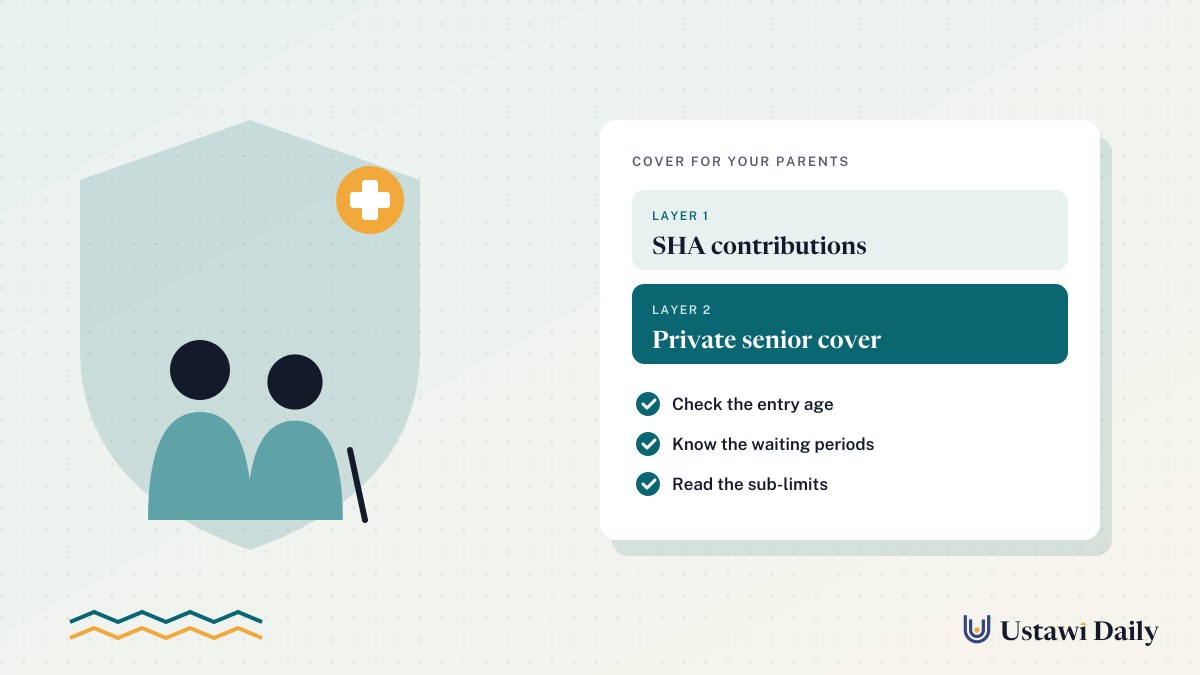
Planning ahead makes a real difference. This guide to health insurance for parents in Kenya explains how to combine the Social Health Authority (SHA) with private senior medical cover, what to look for in a policy, and the age limits and waiting periods that make it important to act early.
Key takeaways
- Start with SHA. Parents are not dependants under SHA, so they need their own registration and contributions, which you can pay for them, including through SHA’s sponsorship programme.
- Add private senior cover for wider choice of hospitals and higher limits. Several insurers publish senior covers that accept new members aged roughly 60 or 65 up to 75–80.
- Entry ages matter: once a parent passes a plan’s maximum joining age, that plan is closed to them. Many senior plans can then be renewed for life, subject to the insurer’s terms.
- Waiting periods apply: chronic and pre-existing conditions are commonly covered only after a waiting period, often 10 to 12 months. Buy cover before you need it.
- Read the limits: check sub-limits for chronic conditions, cancer and outpatient care, and which hospitals are in the network.
Layer one: SHA cover for your parents
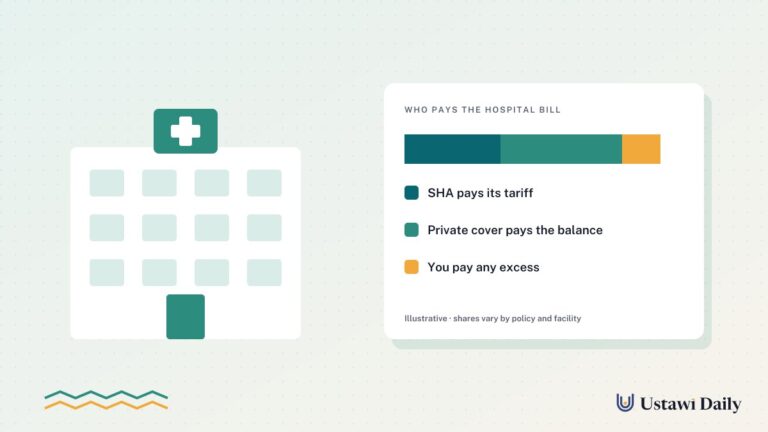
The Social Health Authority is the base layer of health cover in Kenya. Because parents are generally not dependants under SHA, each parent needs their own registration and contributions.
- Pay directly: through M-Pesa Paybill 200222, using your parent’s national ID number as the account number.
- Sponsor them: through SHA’s sponsorship programme, opened to individuals and organisations in October 2026. Sponsors register at sponsor.sha.go.ke and cover each beneficiary for at least 12 months. Your parents must have completed registration and means testing first.
SHA helps with costs at contracted facilities, but it has limits, and members have reported challenges with access and claims. If you can afford it, private cover on top can fill many of the gaps. For full details, read SHA in Kenya explained.
Layer two: private senior medical cover
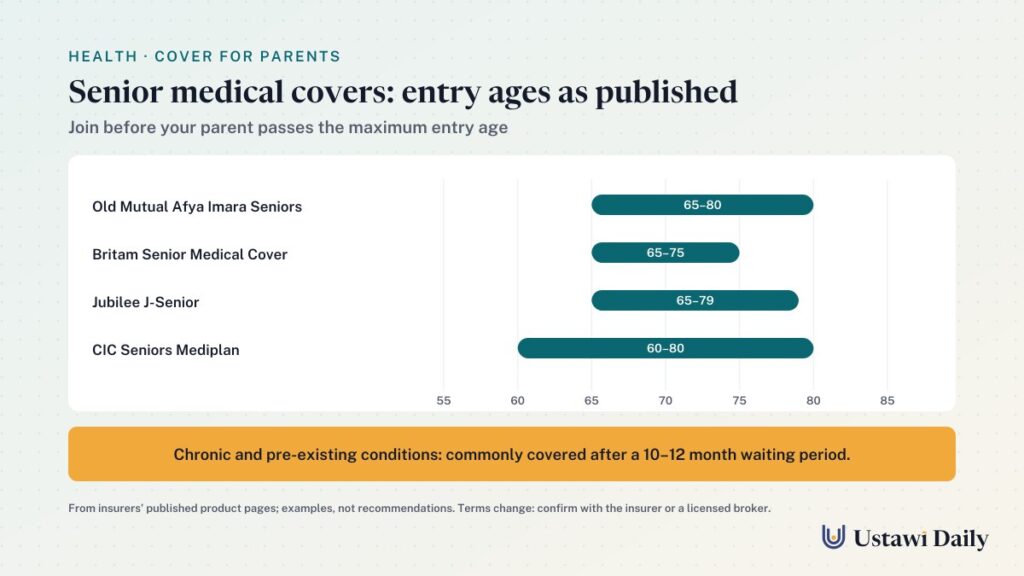
Private medical insurance can give your parents a wider choice of private hospitals, higher limits and faster admission. Several Kenyan insurers offer covers designed for older people. Here is what some publish on their own websites:
| Insurer and plan | Entry age (as published) | What the insurer highlights |
|---|---|---|
| Old Mutual Afya Imara Seniors | 65 to 80 | Inpatient limits from KSh 500,000 to KSh 10 million; covers pre-existing and chronic conditions; renewal for life subject to review |
| Britam Senior Medical Cover | 65 to 75 | No exit age; 10-month waiting period for chronic and pre-existing conditions; 1-year waiting period for surgery |
| Jubilee J-Senior | 65 to 79 | Inpatient cover up to KSh 10 million; pre-existing conditions covered after a waiting period, typically 12 months |
| CIC Seniors Mediplan | 60 to 80 | Inpatient, outpatient, dental and optical options; 1-year waiting period for pre-existing and chronic conditions |
Examples taken from the insurers’ published product pages, not recommendations or a complete list. Terms, limits and waiting periods change; confirm the current policy document and premium with the insurer or a licensed broker before buying. Ustawi Daily has no commercial relationship with any insurer mentioned.
Premiums for senior covers are considerably higher than for younger adults. They depend on your parents’ ages, the limits you choose, and whether you add outpatient, dental or optical benefits. Get written quotes for the same level of cover from several insurers, and confirm whether the premium must be paid in full upfront.
What to check before buying health insurance for parents in Kenya
- Entry and renewal ages. What is the maximum joining age, and can your parents renew for life once enrolled?
- Waiting periods. How long before illness, surgery, chronic and pre-existing conditions are covered? Accidents are often covered immediately.
- Pre-existing and chronic conditions. Conditions such as high blood pressure or diabetes may be covered only after a waiting period, and sometimes with a lower sub-limit. Declare every condition honestly on the application; non-disclosure can lead to rejected claims.
- Limits and sub-limits. Look beyond the headline inpatient limit to the limits for cancer treatment, chronic conditions, surgery and outpatient care.
- Hospital network. Are the hospitals near your parents included, and do they offer direct billing, so your parents are not asked to pay first and claim later?
- How SHA fits in. Some insurers expect SHA to pay its share first. Ask how the policy works alongside SHA.
- Medical assessment. Older applicants may need a medical report or examination before cover is approved.
- Exclusions. Read what is not covered. The policy document, not the brochure, is what counts.
Why acting early matters
- Entry ages close. If a parent is 78, a plan with a maximum entry age of 75 is no longer an option, and the choice narrows each year.
- Waiting periods run from the start date. Cover bought today may not pay for a chronic condition for about a year. Buying after a diagnosis can leave a long gap.
- Lifetime renewal. Many senior plans let existing members renew for life, subject to the insurer’s terms, so joining early can secure cover for later years.
Other ways to protect your parents
- A dedicated emergency fund. Keep money for co-payments, excluded treatment and transport in an easy-access money market fund.
- Group covers. Some SACCOs and employers offer medical schemes that can include members’ parents. Ask what is available to you.
- A trusted person on the ground. Agree who will accompany your parents to hospital, handle admissions, and contact the insurer if something happens.
- Keep documents ready: your parents’ ID copies, SHA and insurance numbers, and the insurer’s emergency line, shared with family in Kenya.
Paying for cover from abroad
Insurers and brokers commonly accept payment by bank transfer, and some by card or mobile money. A Kenyan bank account can make renewals and top-ups easier: see how to open a bank account in Kenya from abroad. Set a reminder well before each renewal date, because a lapsed policy may mean restarting waiting periods.
Use only insurers and intermediaries licensed by the Insurance Regulatory Authority (IRA). Be wary of anyone selling “cover” informally or asking you to pay into a personal account.
Frequently asked questions
What is the best health insurance for parents in Kenya?
There is no single best plan. A common approach is to combine SHA with a private senior medical cover, choosing a plan whose entry age, hospital network, limits and waiting periods suit their parents’ health and budget.
Can I buy health insurance for parents in Kenya from abroad?
Yes. You can arrange and pay for private cover through an insurer or licensed broker from abroad, and pay your parents’ SHA contributions or sponsor them through SHA’s sponsorship programme.
What is the maximum age for medical insurance in Kenya?
It depends on the plan. Senior covers published by Kenyan insurers accept new members up to ages ranging from about 75 to 80, and many allow renewal for life once enrolled, subject to the insurer’s terms.
Are pre-existing conditions covered for elderly parents?
Many senior plans cover pre-existing and chronic conditions after a waiting period, commonly around 10 to 12 months, and sometimes with sub-limits. Declare all conditions honestly when applying.
Are parents covered under my SHA?
Generally no. Parents need their own SHA registration and contributions, which you can pay or sponsor.
Read next
- SHA in Kenya explained: what you pay and how to register your family
- Sending money to Kenya: how to cut remittance costs
- How to invest in Kenya from abroad: the complete guide
Have a question about covering your parents? Email editor@ustawidaily.com with the subject “Question,” and we’ll answer the most common ones in future guides.
Sources: Social Health Authority (contributions and sponsorship programme); published product pages of Old Mutual (Afya Imara Seniors), Britam (Senior Medical Cover), Jubilee (J-Senior) and CIC (Seniors Mediplan); Insurance Regulatory Authority. Last reviewed: 28 October 2026.
This article is general information, not medical, insurance or financial advice. Policy terms vary and change. Read the full policy document and consult the insurer or a licensed broker before buying cover.