Building a House in Kenya From Abroad (2026): Costs, Approvals and How to Avoid Being Cheated
DIASPORA DESK · PROPERTY
Building a house in Kenya from abroad is a dream for many Kenyans in the diaspora, and a nightmare for some. Money goes missing, walls go up on the wrong plot, or a builder disappears halfway through. Here is how to build safely from a distance: the approvals you need, the professionals to hire, what it costs, and how to pay without losing control.
Building a home back in Kenya is one of the biggest projects many Kenyans abroad ever take on. Done well, it creates a home for retirement, a base for visits, or a source of rental income. Done badly, it can drain years of savings with little to show for it.
Success when building a house in Kenya from abroad usually comes down to three things. Use qualified, registered professionals. Get the approvals right before you build. And pay only for work that has been independently checked. This guide covers each, step by step.
Key takeaways
- Secure the land first: verify the title before you design or build anything.
- Use registered professionals: a BORAQS-registered architect, an EBK-registered structural engineer, a registered quantity surveyor and an NCA-registered contractor.
- Get county planning approval and register the project with the National Construction Authority (NCA) before construction starts.
- Published 2026 industry estimates put building costs at roughly KSh 35,000 to KSh 120,000 or more per square metre, depending on finishes and location. Get a proper Bill of Quantities.
- Pay in stages, only after work is independently verified, with a written contract and a retention held until defects are fixed.
- Never hand a relative or contractor a lump sum to “get on with it.”
Step 1: Make sure the land is really yours
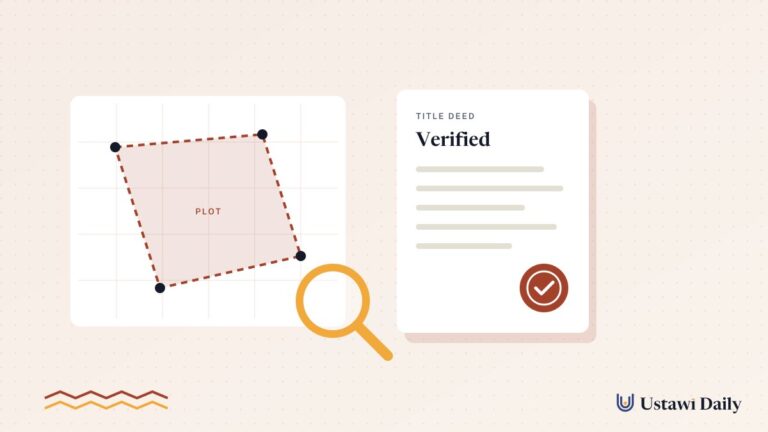
Before spending anything on design, confirm that the land is legally yours and that the plot on the ground matches your title. That means an official search, a licensed surveyor to confirm the beacons, and a clean transfer into your name. Read our guide on how to verify a title deed in Kenya from abroad, and budget for the full cost of buying land in Kenya.
Also check what you are allowed to build. Zoning rules set limits on things like plot coverage, building height and use, and they vary by county and area.
Step 2: Assemble a professional team
Building a house in Kenya from abroad means relying on people you cannot supervise in person, so qualifications and registration matter even more.
| Professional | What they do | Registered with |
|---|---|---|
| Architect | Designs the house and prepares the drawings for county approval | Board of Registration of Architects and Quantity Surveyors (BORAQS) |
| Structural engineer | Designs the foundations and structure so the building is safe | Engineers Board of Kenya (EBK) |
| Quantity surveyor | Prepares the Bill of Quantities, estimates costs and values completed work | BORAQS |
| Contractor | Builds the house | National Construction Authority (NCA) |
Under Kenyan law, building plans submitted for county approval must be prepared by a registered architect. Check each professional’s registration yourself on the official board’s website or register, rather than relying on certificates they send you.
It is good practice to appoint a project manager, or ask the architect or quantity surveyor to supervise the site. They should certify the work before each payment. Make sure they are independent of the contractor.
Step 3: Get the approvals before you build
- County planning and building approval. Your architect submits the approved-for-construction drawings to the county planning department. Building without approval can lead to fines, stop orders or even demolition.
- NCA project registration. Construction projects must be registered with the National Construction Authority, and a construction levy applies to projects above a set value.
- Environmental approval where required. Some projects need approval from the National Environment Management Authority (NEMA), depending on size, location and type.
- Utilities. Plan water, sewerage and electricity connections early, as approvals and costs vary.
At the end, the county issues an occupation certificate confirming the building complies with the approved plans. Keep every approval: you will need them if you sell, rent out or mortgage the property.
What does it cost to build a house in Kenya?
Costs depend mainly on the size of the house, the quality of finishes, and location. Estimates published by architects and construction firms in 2026 commonly fall in these ranges:
| Finish level | Approximate cost per square metre (2026) | A 100 m² house (approximate) |
|---|---|---|
| Basic | KSh 35,000 to KSh 50,000 | KSh 3.5 million to KSh 5 million |
| Mid-range | KSh 50,000 to KSh 80,000 | KSh 5 million to KSh 8 million |
| High-end | KSh 80,000 to KSh 120,000 or more | KSh 8 million to KSh 12 million or more |
Industry estimates, not quotes. Published ranges vary between firms, and costs in Nairobi are often higher than elsewhere. Get a Bill of Quantities from a registered quantity surveyor for your actual design and site.
Budget beyond the building itself. Allow for professional fees, approvals and the NCA levy, utility connections, fencing and landscaping. Add a contingency of at least 10% for price rises and surprises.
Step 4: Sign a proper building contract
- A written contract that sets out the work, the price, the timeline and the payment schedule. Standard building contract forms are available, and your architect or quantity surveyor can advise.
- The Bill of Quantities and drawings attached to the contract, so the contractor builds exactly what was priced and approved.
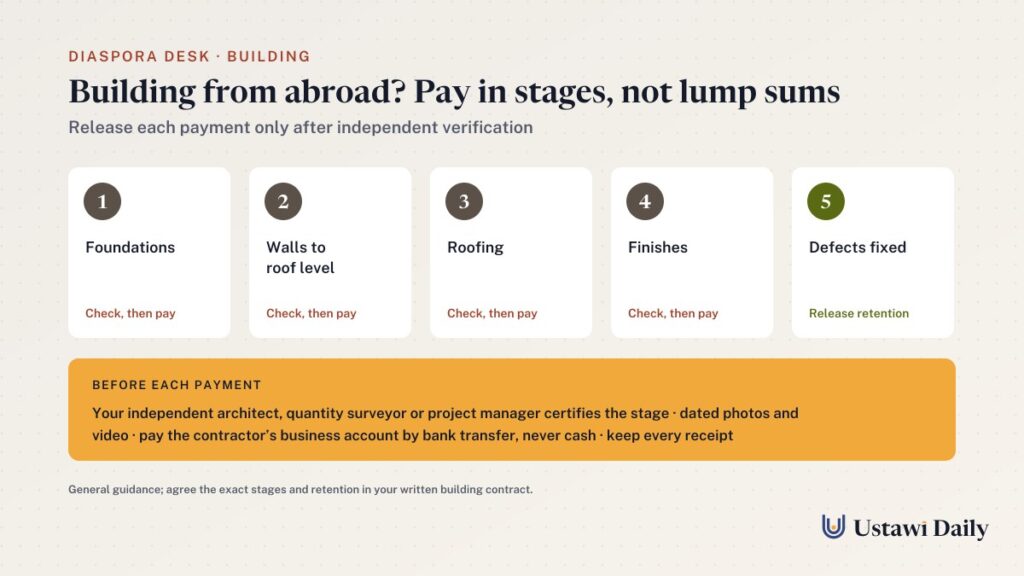
- A retention: a percentage of each payment held back until the end of a defects period, so the contractor has a reason to fix problems.
- Clear rules for changes: any change to the design or price must be agreed in writing before the work is done.
- Insurance: ask whether the contractor carries insurance covering the works and accidents on site.
Step 5: Pay in stages, only for verified work
This is one of the most important protections for anyone building a house in Kenya from abroad.
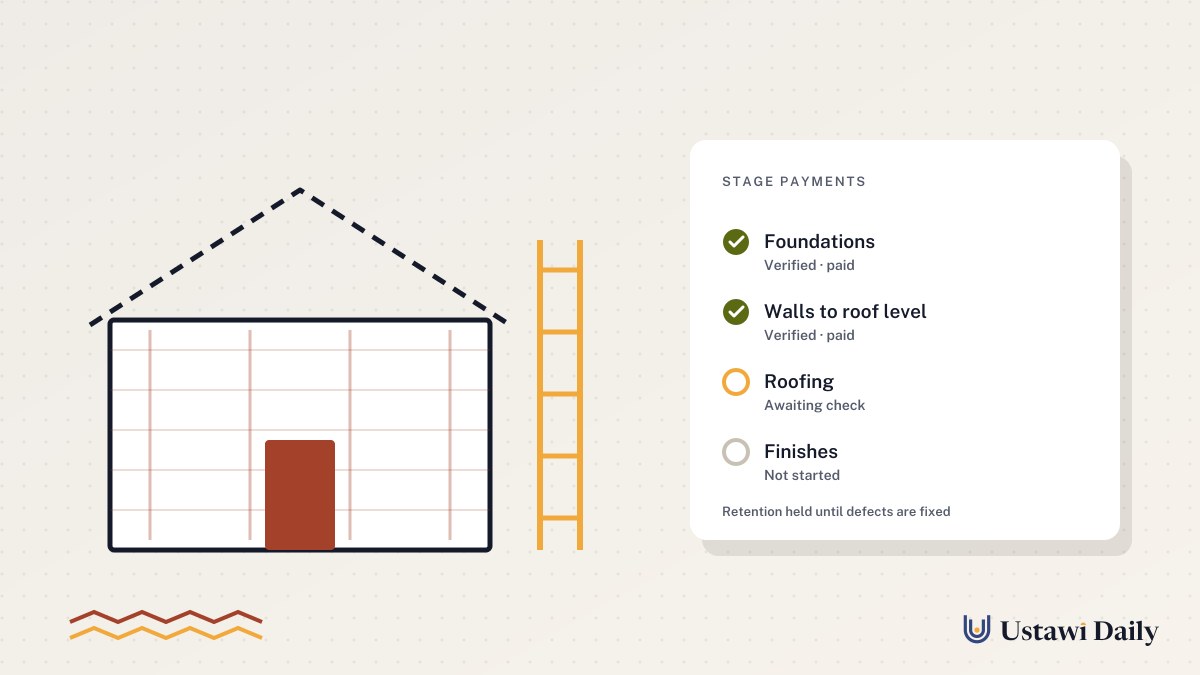
- Link payments to construction stages, such as foundations, walls to roof level, roofing, and finishes.
- Pay only after the stage is checked by your independent architect, quantity surveyor or project manager. They confirm the work matches the drawings and is worth the amount claimed.
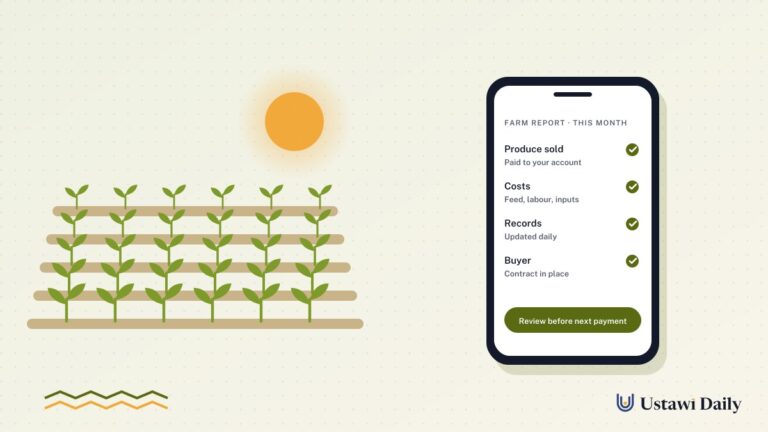
- Ask for dated photos and videos, and if possible live video calls on site, before each payment.
- Pay the contractor’s business account by bank transfer, never cash, and keep every receipt. A separate Kenyan bank account for the project makes tracking easier. See how to open a bank account in Kenya from abroad.
- Arrange independent site visits, by a trusted person or professional, at key stages.
The common traps when building a house in Kenya from abroad
- Sending lump sums to a relative to manage the build. Even with good intentions, money can be misused or wasted, and family relationships can suffer. Use professionals and staged payments instead.
- Paying a contractor a large deposit upfront. If they disappear or stop work, recovering the money from abroad is very hard.
- Building without approvals, to save time or money. It risks fines and demolition, and makes the house hard to sell or mortgage.
- Skipping the structural engineer. Poor structural design and substandard materials are among the causes of building failures. A qualified engineer is not optional.
- No Bill of Quantities. Without one, you cannot compare quotes or check whether you are being overcharged.
- Uncontrolled changes. Verbal changes are a frequent source of cost overruns and disputes.
Paying for the build
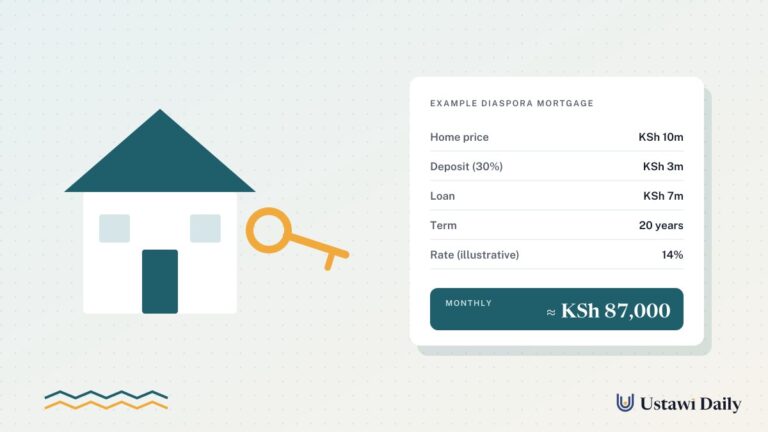
Many diaspora builders pay from savings, sent home in stages as the work progresses. Some use a mortgage or construction loan, which usually requires approved plans and a valuation. Whatever you choose, keep construction money separate from other savings. Hold funds waiting for the next stage somewhere safe and easy to reach, such as a money market fund.
If you plan to rent the house out while living abroad, remember that non-resident landlords now pay 30% of gross rent. See taxes for Kenyans abroad.
Frequently asked questions
Can I build a house in Kenya while living abroad?
Yes. Many Kenyans abroad do, by hiring registered professionals, getting approvals before building, and paying in stages only after each stage is independently checked.
How much does it cost to build a house in Kenya in 2026?
Industry estimates commonly range from about KSh 35,000 to KSh 120,000 or more per square metre, depending on finishes and location. A 100 m² mid-range house might cost roughly KSh 5 million to KSh 8 million, excluding land. Get a Bill of Quantities for your design.
Do I need an architect to build a house in Kenya?
Yes. Plans submitted for county approval must be prepared by an architect registered with BORAQS.
What approvals do I need to build a house in Kenya?
County planning and building approval, NCA project registration, environmental approval where required, and utility connections. An occupation certificate is issued when the building is complete and compliant.
How do I avoid being cheated when building from abroad?
Use registered professionals, sign a written contract with a Bill of Quantities, pay in stages only after independent verification, avoid cash and lump sums, and arrange independent site visits.
Read next
- The real cost of buying land in Kenya
- How to verify a title deed in Kenya from abroad
- How to invest in Kenya from abroad: the complete guide
Building from abroad and have a question? Email editor@ustawidaily.com with the subject “Question,” and we’ll answer the most common ones in future guides.
Sources: Architects and Quantity Surveyors Act (Cap. 525); National Construction Authority; Engineers Board of Kenya; National Environment Management Authority; county planning requirements; 2026 construction cost estimates published by Kenyan architecture and construction firms. Last reviewed: 28 October 2026.
This article is general information, not legal, financial or engineering advice. Requirements vary by county and project. Consult registered professionals before designing or building.