How to Verify a Title Deed in Kenya From Abroad: A Step-by-Step Guide (2026)
DIASPORA DESK · PROPERTY
Buying land back home is one of the biggest investments many Kenyans abroad will ever make, and one of the riskiest. Here is exactly how to verify a title deed in Kenya, and confirm the land is really for sale, before you send a single shilling.
For many Kenyans living in the UK, the US, the Gulf or elsewhere, owning land at home is a lifelong goal. Unfortunately, it is also where many lose their savings. Fake title deeds, land sold to several buyers at once, sellers who don’t actually own the land, and plots that don’t match their documents are all too common.
The good news: Kenya’s land system has become more transparent, and much of the checking can now be started online. This guide shows you how to verify a title deed in Kenya step by step, from abroad.
Key takeaways
- Never rely on a photocopy of a title deed. Always run an official land search.
- Official searches are done on Ardhisasa (for registries already on the system), eCitizen, or in person at the land registry, depending on where the land is.
- A search tells you who owns the land and whether there are loans, cautions or restrictions on it. It does not prove the plot on the ground matches the title. That needs a separate survey check.
- If you can’t be on the ground, an independent due diligence firm can coordinate the checks for you.
- Use a qualified advocate and a properly registered Power of Attorney if someone will act for you in Kenya.
- Never pay the seller directly before every check is complete.
Step 1: Get the right documents from the seller
Before any search, ask the seller for:
- A clear copy of the title deed, showing the parcel number or LR (Land Reference) number
- A copy of the seller’s national ID or passport
- The seller’s KRA PIN
The parcel or LR number is the most important detail. Every search depends on it. If a seller hesitates to share these basic documents, treat it as a serious warning sign.
Step 2: Run an official land search
Where you search depends on whether the land registry for that area has moved onto the digital system.
Ardhisasa (ardhisasa.lands.go.ke): Kenya’s official digital land registry, run by the Ministry of Lands. According to a State Department for Lands notice dated 17 July 2026, it covers Nairobi, Murang’a, Isiolo and Mombasa Island, with more Mombasa areas added from 20 July 2026. The rollout is happening registry by registry, so check the portal or the relevant land registry for your area. Use only the official address: lookalike websites exist.
eCitizen (ecitizen.go.ke): for many areas not yet on Ardhisasa, searches run through the Ministry of Lands services on eCitizen.
Manual search at the land registry: some areas still require an in-person search at the land registry. From abroad, your advocate or a trusted representative can do this for you.
How much does it cost? Published guides differ on the exact figure. Expect roughly KSh 500 to KSh 1,000 per search, depending on the platform and type of search. The portal shows the exact fee before you pay, by M-Pesa or card.
Note: some recent guides report that Ardhisasa asks the registered owner to consent before search results are released. If your search is held up waiting for consent, that can be a normal part of the process. But a seller who refuses to consent is a red flag.
Step 3: Read the search certificate carefully
The official search certificate is the heart of your verification. Check these four things:
- The registered owner: does the name exactly match the seller’s ID? If the seller is “selling on behalf of” someone else, demand proper legal authority, such as a registered Power of Attorney or, for a deceased owner, a confirmed grant of letters of administration.
- The size and description: does the acreage match what you are being offered?
- Encumbrances: look for a charge (the land is security for a bank loan), a caution or caveat (someone has registered a claim or interest), or a restriction (dealings with the land are limited). Any of these can stop or complicate a sale.
- The date: a search is a snapshot. Run a fresh one close to the day you pay.
Step 4: Confirm the land on the ground matches the title
This is the step most people skip, and where many frauds happen. A genuine title can be attached to a different piece of land than the one you are shown.
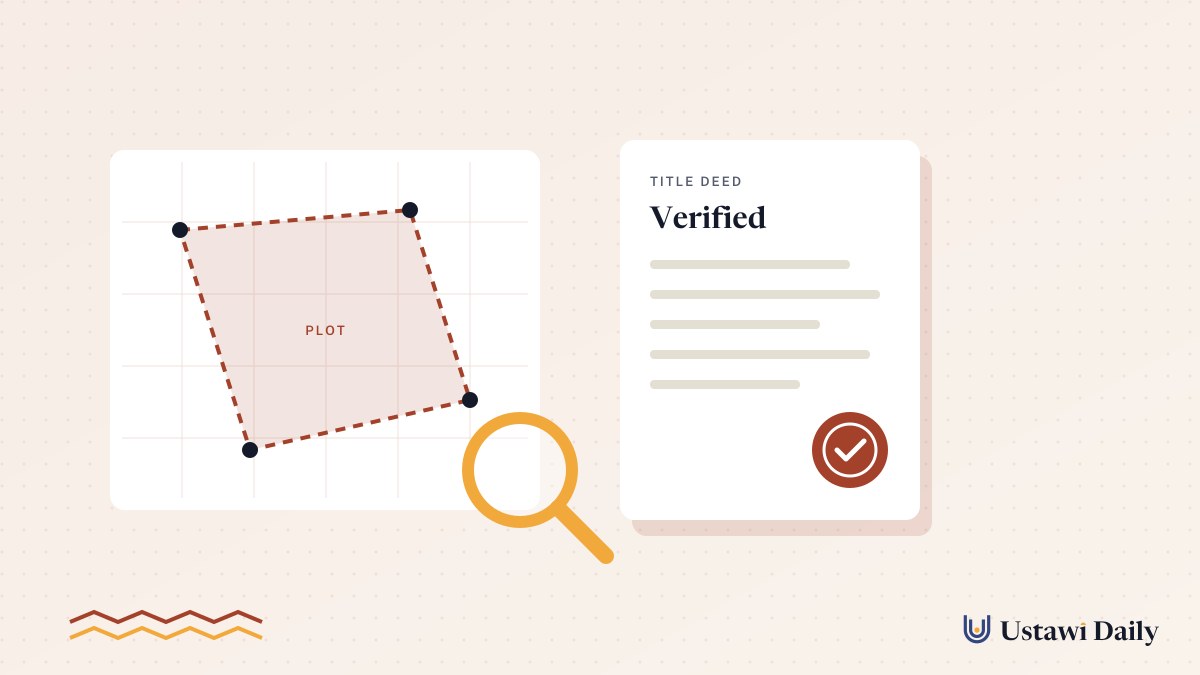
- Get the survey map: obtain the Registry Index Map (RIM) or relevant survey records from the Survey of Kenya to confirm the plot’s location and boundaries.
- Hire a licensed surveyor to locate the beacons and confirm the plot on the ground matches the map.
- Have someone you trust visit the land: check who is actually living on or using it, and talk to neighbours and the local area chief. Occupants or a family dispute can make a “clean” title very hard to take possession of.
Step 5: Check the other clearances
Depending on the type of land, your advocate should confirm:
- Land rates clearance from the county government
- Land rent clearance for leasehold land
- Land Control Board consent for agricultural land, which most rural farmland requires before a transfer
- Spousal consent, where the land is matrimonial property
Step 6: Consider an independent due diligence firm
Because you can’t easily be on the ground yourself, consider hiring an independent verification and due diligence firm to handle the checks in Kenya for you. A good firm coordinates the whole process: confirming the documents against the official records, working with a licensed surveyor to check that the plot on the ground matches the title and survey map, visiting the site, speaking to neighbours and local administration, and giving you a clear written report of any risks before you commit.
When choosing one:
- Make sure it is independent: never use a firm introduced or recommended by the seller.
- Ask for a written scope and report: you should know exactly what will be checked and receive the findings in writing, with photos and copies of search results.
- Check that licensed professionals do the regulated parts: surveying should be done by a licensed surveyor and legal work by a qualified advocate.
- Ask for references from previous diaspora clients.
Step 7: Use an advocate and a properly registered Power of Attorney
From abroad, you will usually need someone in Kenya to act for you. Do this properly:
- Hire an independent advocate, not one recommended by the seller. You can confirm an advocate is in good standing through the Law Society of Kenya.
- Use a Power of Attorney for land matters. A Power of Attorney signed abroad is generally signed before a notary public and authenticated through the Kenyan embassy or high commission in that country. In Kenya, it must then be stamped and registered. The Ministry of Lands lists the requirements for registration as the executed document, proof of stamp duty payment, ID or passport, KRA PIN certificate and two passport photos, with a registration charge of KSh 1,000.
- Limit the Power of Attorney to the specific transaction where possible, rather than giving someone general control over your affairs.
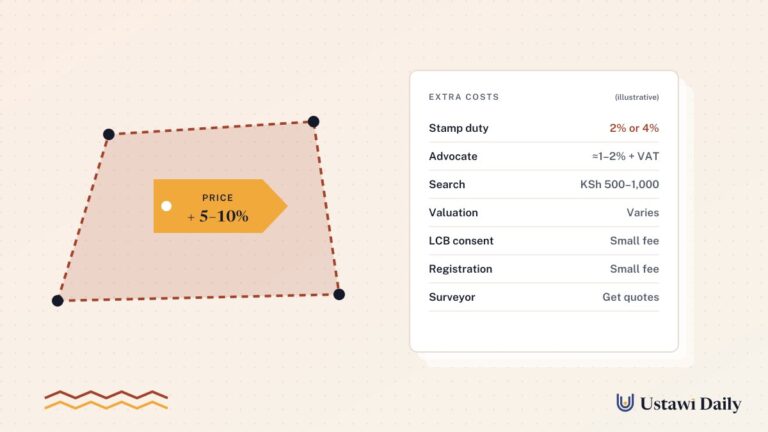
Budget for transfer costs too: stamp duty on a land transfer is charged at 2% or 4% of the property’s value: generally 4% for land in municipalities and urban areas and 2% for rural land. Add registration fees and your advocate’s fees. Stamp duty is increasingly assessed and paid online through the Ministry of Lands’ digital systems, so ask your advocate for the official assessment and payment receipt.
Step 8: Pay safely
- Never pay a deposit to the seller’s personal account before your checks are complete.
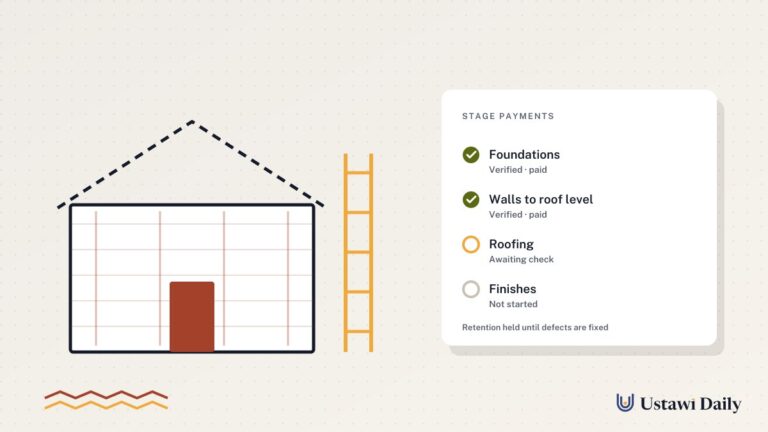
- Pay through your advocate’s client account, in stages tied to clear milestones, such as signing the sale agreement and registering the transfer.
- Send the money through your own Kenyan bank account so every payment leaves a clear record. See our guide on how to open a bank account in Kenya from abroad, and on how to send money to Kenya for less.
- Keep every receipt and document, and get the final transfer registered in your name as quickly as possible.
Saving up for the purchase? Holding your funds in a money market fund lets them earn interest while you complete these checks.
Red flags that should stop you
If any of these appear while you verify a title deed in Kenya, stop and get independent advice before paying anything:
- The seller pushes you to pay quickly “before another buyer takes it”
- The price is well below similar plots in the area
- The seller refuses an official search, or offers a “search” they ran themselves
- The name on the search does not match the seller’s ID
- The seller can’t show you the beacons, or the plot location keeps changing
- People are living on the land and nobody can explain why
Frequently asked questions
Can I verify a title deed in Kenya while living abroad?
Yes. Where the land registry is on Ardhisasa, you can run the official search online from anywhere. For other areas, use eCitizen or have your advocate run a manual search at the registry. The physical checks (survey and site visit) need a trusted person, an independent due diligence firm, or professionals on the ground.
Which areas are on Ardhisasa?
According to a State Department for Lands notice of July 2026, Ardhisasa covers Nairobi, Murang’a, Isiolo and Mombasa Island, with more Mombasa areas added from 20 July 2026. Coverage expands registry by registry, so confirm on the portal or with the land registry for your area.
How much does a land search cost in Kenya?
Roughly KSh 500 to KSh 1,000 per search, depending on the platform. Confirm the exact fee on the portal before paying.
How long does a land search take?
Online searches can return results within hours to a few working days. Manual searches at a registry usually take a few working days.
Does a clean search mean the land is safe to buy?
Not on its own. A search confirms ownership and registered interests, but you also need a survey check, a site visit, the relevant clearances and an advocate’s review.
What does a land due diligence firm do?
It coordinates the checks you can’t do from abroad: verifying documents against official records, arranging a licensed survey, visiting the site and reporting any risks in writing, so you can decide with full information.
Read next
- How to open a bank account in Kenya from abroad
- Sending money to Kenya: how to cut remittance costs
- More practical guides on our Diaspora Desk
- The real cost of buying land in Kenya
- Off-plan property in Kenya: how to check a developer
- How to invest in Kenya from abroad: the complete guide
Sources: State Department for Lands notice on Ardhisasa rollout (17 July 2026); Ministry of Lands service requirements for registering a Power of Attorney; the Stamp Duty Act; the Land Registration Act, 2012. Last reviewed: 20 October 2026.
This article is general information, not legal advice. Land law and procedures change. Before buying, consult a qualified advocate and verify current requirements with the Ministry of Lands.