Off-Plan Property in Kenya (2026): How to Check a Developer Before You Pay
PROPERTY · DIASPORA DESK
Off-plan homes can cost less and let you pay in stages, which is why they appeal to so many buyers, especially Kenyans abroad. But when a project stalls, buyers can wait years or lose their money. Here is how to check a developer before buying off-plan property in Kenya, step by step, and what the law does and does not do to protect you.
Buying off-plan means paying for a home before it is built, often at a lower price than a finished unit, with instalments spread over the construction period. For buyers abroad, it can look like an ideal way to own property in Kenya.
But the risk is real. In 2026, the Business Daily reported on buyers who lost money when an off-plan project in Westlands, Nairobi, stalled. Delays, unfinished buildings and title problems have affected buyers in other projects too. The good news: many of these problems can be spotted before you pay, if you know where to look.
Key takeaways
- As of October 2026, Kenya has no dedicated off-plan law and no requirement for developers to hold buyers’ deposits in escrow. Your protection rests mainly on your own checks and the sale agreement.
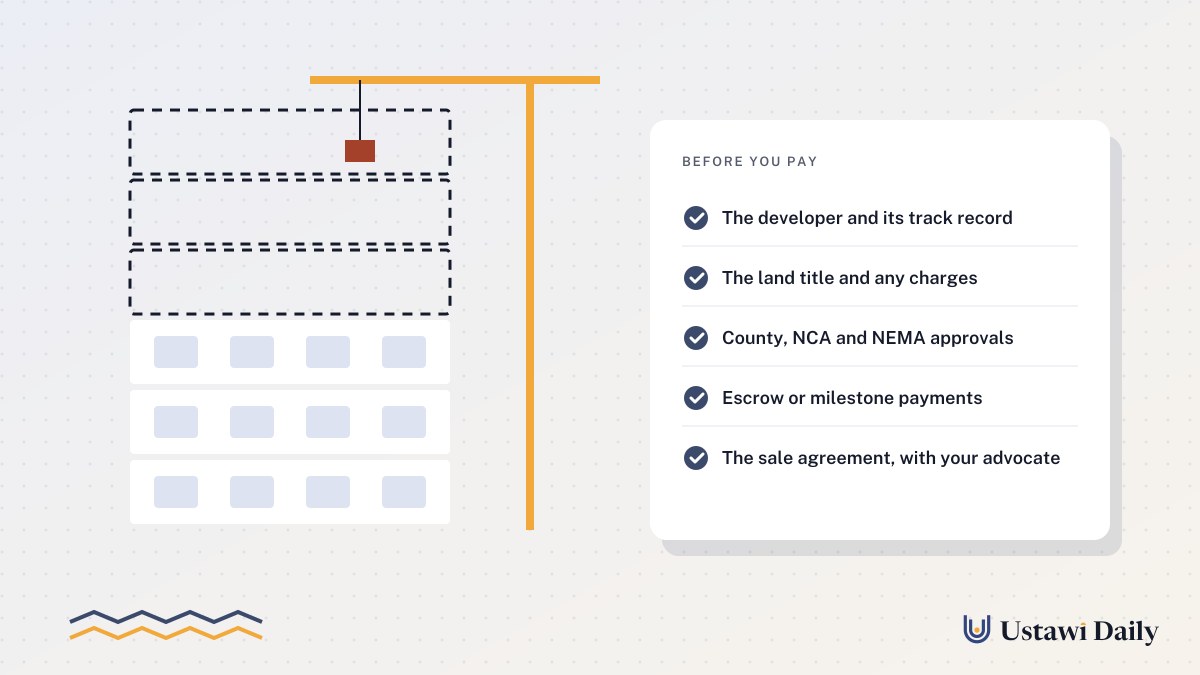
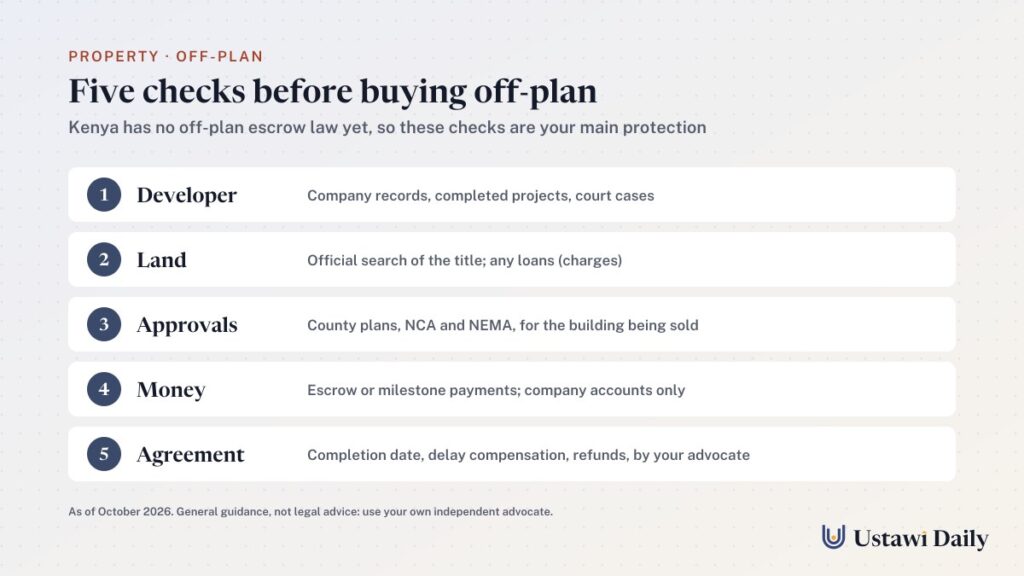
- Check the developer (company records, track record, court cases), the land (an official search of the title and any loans against it) and the approvals (county, NCA and NEMA).
- The Sectional Properties Act, 2020 requires developers of units such as apartments to give buyers key documents before selling, including title documents, the proposed sectional plan, and details of any loan secured on the property.
- Negotiate payments linked to construction milestones, ideally into an escrow or stakeholder account, and never pay an individual’s personal account.
- Use your own independent advocate, and read the clauses on completion dates, delay compensation, refunds and termination.
The risks of buying off-plan property in Kenya
- Delays: completion can slip by months or years.
- Stalled projects: if a developer runs out of money, construction can stop altogether.
- Title problems: the land may not be fully owned by the developer, or may be charged to a lender.
- Changes to what you get: finishes, sizes or facilities may differ from the brochure.
- Weak contracts: some agreements give buyers few remedies, or allow the developer to keep large sums if the buyer cancels.
What the law says in 2026
Kenya does not have a single law for off-plan sales. Instead, several laws apply:
- The Law of Contract Act requires a sale of land to be in a written agreement, signed by the parties and properly witnessed.
- The Land Registration Act, 2012 and the Land Act, 2012 govern titles and transfers.
- The Sectional Properties Act, 2020 governs how individual units, such as apartments, get their own titles. According to lawyers writing in the Chambers Real Estate 2026 guide, section 43 of the Act requires a developer to provide the purchase agreement, by-laws, any management agreement, the title documents and the sectional plan or proposed plan before selling a unit, and to disclose any existing or proposed charge (loan) on the property.
- The Physical and Land Use Planning Act, 2019, the National Construction Authority Act and environmental law govern approvals.
- The Consumer Protection Act, 2012 provides general protection against misleading practices.
What is missing is mandatory escrow, licensing of developers, and a dedicated regulator for off-plan sales. A Real Estate Regulation Bill tabled in the Senate in 2023 proposed registering developers and projects, but as of October 2026 it has not become law. Until it does, escrow and milestone payments are things you must negotiate, not things the law guarantees.
How to check a developer before you pay: step by step
1. Check the company
- Company records: confirm the developer is a registered company and see who its directors and shareholders are, through the Business Registration Service. Your advocate can obtain an official company search.
- Track record: visit projects the developer has completed. Talk to people who bought there: was the project finished on time, to the promised standard, and did they receive their titles?
- Court cases: search for cases involving the developer and its directors on Kenya Law, and search the news.
2. Check the land
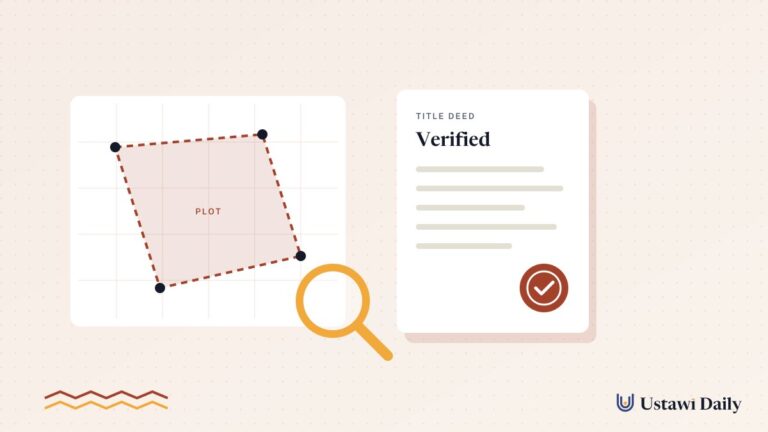
- Run an official search on the title of the land the project is built on, often called the mother title. Confirm who owns it. If the developer does not own it outright, find out the legal arrangement, such as a joint venture with the landowner.
- Look for charges: if the land is security for a loan, ask how and when the lender will release each unit, so you can get a clean title.
- Follow our guide on how to verify a title deed in Kenya.
3. Check the approvals
- County approval of the building plans, for the number of floors and units being sold.
- National Construction Authority (NCA) registration of the project and contractor.
- Environmental approval from the National Environment Management Authority (NEMA), where required.
- Change of user, if the land was zoned for a different use.
Ask to see copies, and have your advocate confirm they are genuine and match what is being built.
4. Check where your money goes
- Escrow or stakeholder account: ask whether deposits are held by an independent bank, trustee or advocate and released to the developer only as construction milestones are completed. Lawyers describe this as among the strongest protections a buyer can negotiate.
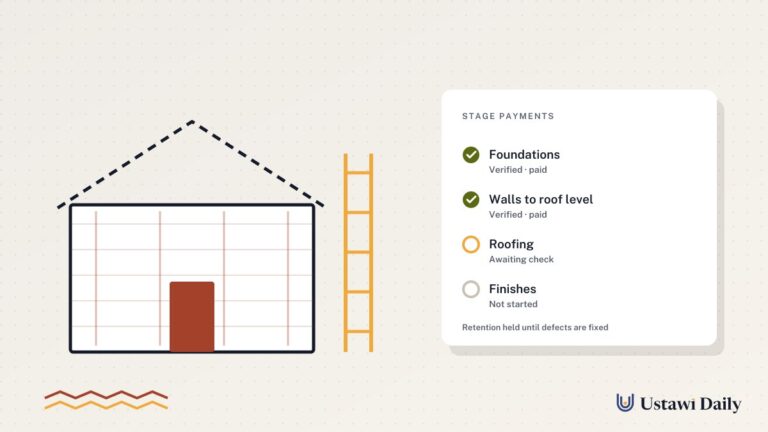
- Milestone-linked payments: link instalments to verified stages, such as foundations, structure, roofing and finishes, rather than to dates alone.
- Company accounts only: pay only into an account in the developer’s company name, or an escrow account, by bank transfer. Never pay cash, and never pay an individual’s personal account.
5. Check the sale agreement
Have your own independent advocate review the agreement, not the developer’s lawyer. Look for:
- A clear completion date, and compensation for delay.
- Your right to a refund if the project does not proceed, and how quickly it must be paid.
- Termination and forfeiture clauses: how much the developer can keep if you cancel, and whether this is fair.
- A detailed specification of the unit, finishes and shared facilities.
- How and when you will receive an individual title, and how the management company and service charges will work.
Red flags when buying off-plan property in Kenya
- Pressure to pay quickly to secure a “discount”
- No approvals to show, or approvals for a smaller building than the one being sold
- Requests to pay a personal account, or in cash
- No completed projects you can visit
- A sale agreement the developer will not let you change or have reviewed
- A price far below similar homes nearby
Extra steps if you are buying from abroad
- Arrange independent site visits by a trusted person or professional at key stages, with dated photos and videos.
- Pay from your own Kenyan bank account, so every payment is recorded. See how to open a bank account in Kenya from abroad.
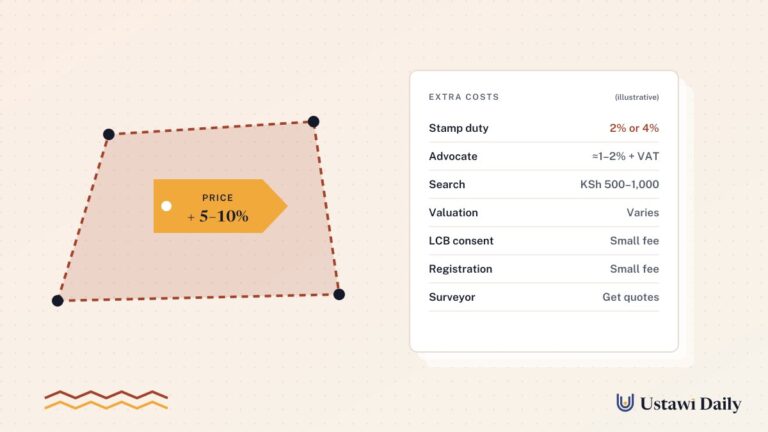
- Budget for the full cost, including stamp duty and legal fees. See the real cost of buying land in Kenya.
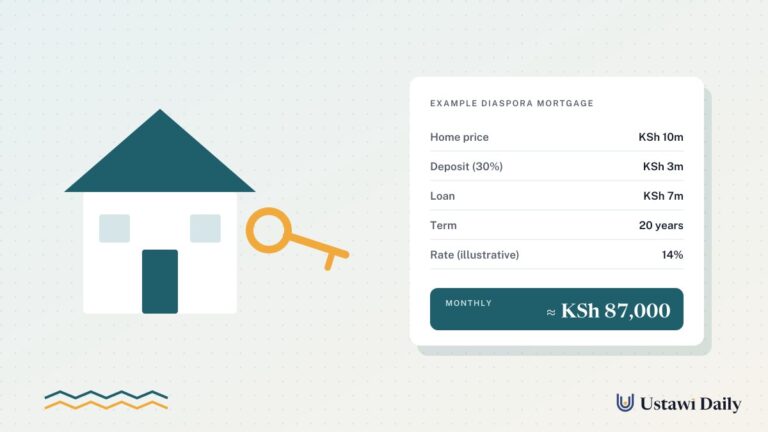
- If you need a mortgage, check whether your lender finances off-plan purchases from this developer. See diaspora mortgages in Kenya.
What to do if a project stalls
- Read your sale agreement for your rights on delay, refunds and termination.
- Write to the developer through your advocate, asking for a revised timeline or a refund under the agreement.
- Connect with other buyers. Acting together can strengthen your position and share legal costs.
- Take legal advice on remedies under your contract and Kenyan consumer protection law, including going to court.
Recovering money after a project fails can be slow and uncertain, which is why the checks before you pay matter most.
Frequently asked questions
Is it safe to buy off-plan property in Kenya?
It can be, with a reputable developer and careful checks, but the risk is higher than buying a finished home. Kenya has no mandatory escrow law, so your protection depends on due diligence and the sale agreement.
Is there an escrow law for off-plan property in Kenya?
Not as of October 2026. Escrow and milestone-based payments must be negotiated with the developer and written into the sale agreement.
How do I check if a developer is genuine?
Confirm the company’s registration and directors, visit its completed projects, search for court cases, run an official search on the land, and check county, NCA and NEMA approvals.
What documents should a developer give me?
For units such as apartments, the Sectional Properties Act, 2020 requires the developer to provide the purchase agreement, by-laws, any management agreement, title documents and the sectional plan or proposed plan, and to disclose any charge on the property.
What happens if an off-plan project stalls?
Your rights depend mainly on the sale agreement. Through an advocate, you may seek completion, compensation or a refund, and in some cases go to court. Acting together with other buyers can help.
Read next
- How to verify a title deed in Kenya from abroad
- Diaspora mortgages in Kenya
- Building a house in Kenya from abroad
Considering an off-plan purchase and have a question? Email editor@ustawidaily.com with the subject “Question,” and we’ll answer the most common ones in future guides.
Sources: the Sectional Properties Act, 2020 and Sectional Properties Regulations, 2021; the Law of Contract Act; the Land Registration Act, 2012 and Land Act, 2012; the Physical and Land Use Planning Act, 2019; the Consumer Protection Act, 2012; Chambers and Partners, Real Estate 2026: Kenya; Business Daily reporting on stalled off-plan projects (2026); Kenya Law. Last reviewed: 28 October 2026.
This article is general information, not legal advice. Every development and agreement is different. Consult a qualified, independent advocate before buying off-plan property.